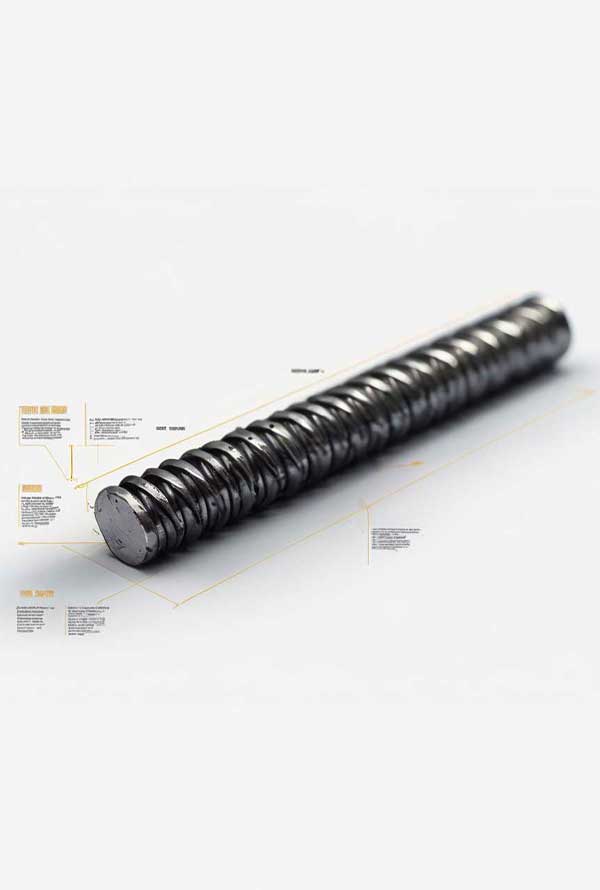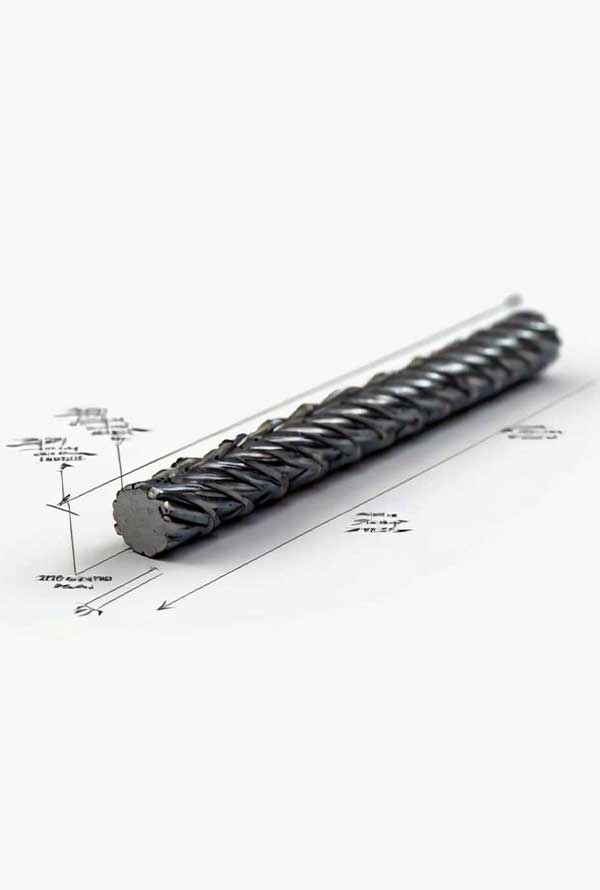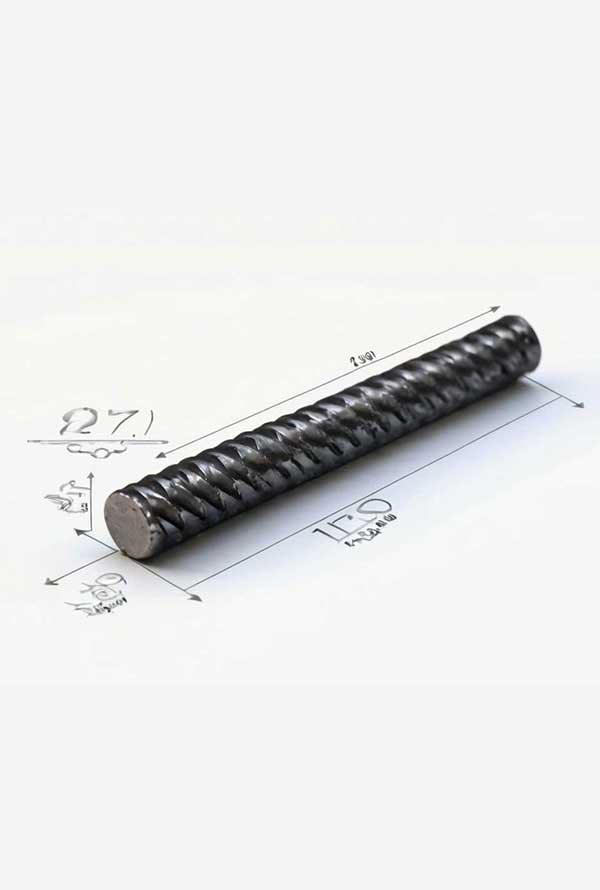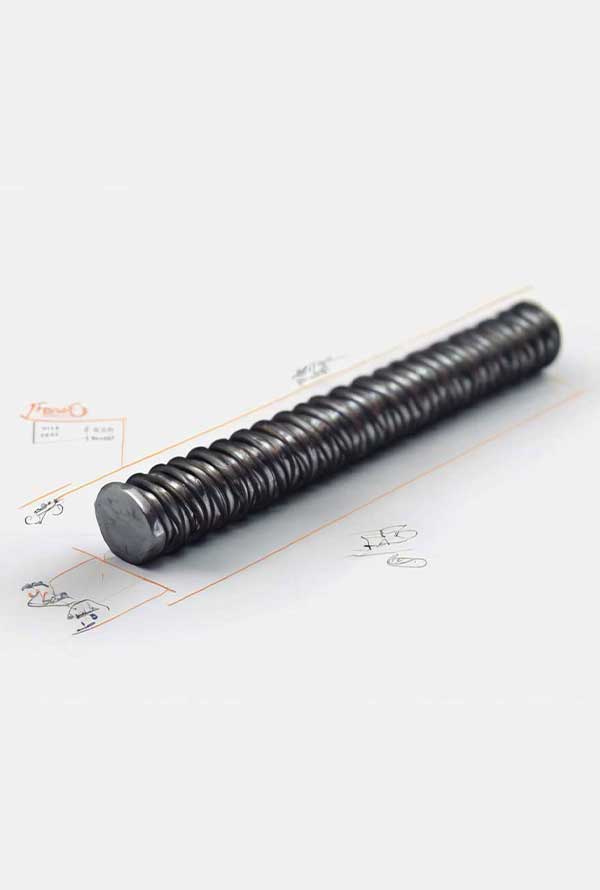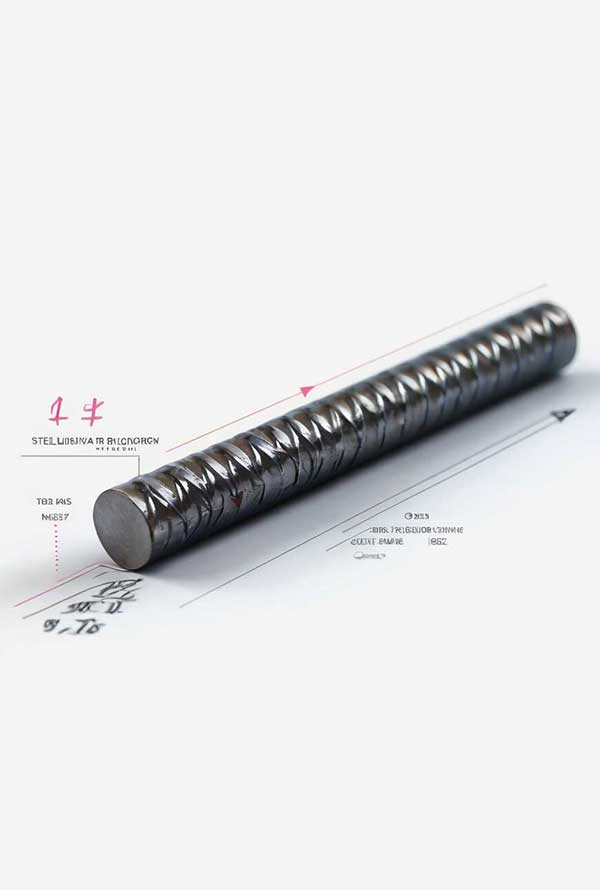
Deformed rebar 8 is widely used in the construction industry due to its better adhesion to concrete and its ability to enhance the tensile strength of structures. The price of this type of rebar varies depending on factors such as rib type, manufacturer, fluctuations in the steel market, and currency exchange rates.
Factors Affecting the Price of Rebar 8
The price of rebar is influenced by multiple factors, including:
- Rib Type: The rib design directly impacts the bonding strength between the rebar and concrete, thus affecting the product’s final price.
- Manufacturer: The quality of raw materials, production processes, and brand reputation influence pricing strategies.
Other important variables include global steel market fluctuations, exchange rates, and the supply-demand balance in the domestic market. Additionally, the weight of each rebar unit—determined by its diameter, length, and steel density—also plays a significant role in pricing. Differences in these parameters across manufacturers can result in price variations.
Technical Specifications of 8 Rebar
This type of rebar is a commonly used steel section in construction to improve concrete tensile strength and create a more homogeneous composition in structures.
Standard Geometric Specifications of Deformed Rebar 8
According to Iran’s national standard (ISIR 3132), the geometric specifications for deformed rebar 8 with uniform and helical ribs are as follows:
| Feature | Uniform Rib | Helical Rib | Unit | Tolerance |
|---|---|---|---|---|
| Base Diameter (mm) | 7.5 | – | Millimeters | ±0.3 |
| Rib Height – Transverse (mm) | 0.75 | 0.52 (middle) | Millimeters | ±0.25 |
| Rib Width – Transverse (mm) | 0.75 | 0.36 (¼ from center) | Millimeters | ±0.25 |
| Outer Diameter (mm) | 0.75 – 0.9 | – | Millimeters | – |
| Pitch (mm) | 5 | 8 | Millimeters | – |
| Rib Height – Longitudinal (mm) | 0.75 – 1.25 | – | Millimeters | – |
| Rib Width – Longitudinal (mm) | – | – | Millimeters | – |
| Relative Rib Area (%) | – | 5.7 | Percentage | – |
Additional Specifications
- Diameter: 8 mm
- Standard Length: 12 meters (can vary based on manufacturer).
- Manufacturer: Foolad Sirjan Hadid
- Approximate Weight per Unit: 5 kg (exact weight varies by manufacturing standards and steel density).
Key Considerations
When selecting rebar, it is essential to:
- Dimension Tolerances: Ensure dimensions are within permissible tolerances as per standards.
- Rib Type: Rebar with uniform or helical ribs have distinct properties and applications.
- Compliance with Standards: Use rebar produced to national or international standards to guarantee safety and quality in structures.
Applications of Size 8 Rebar in Construction
Rebar 8 is crucial for reinforcing concrete structures, such as:
- Main Structural Components: Foundations, columns, beams, slabs, and walls.
- Reinforced Mesh: To distribute stresses evenly in concrete and prevent cracking, particularly in high-tensile stress areas.
- Joist Blocks: Used in block ceiling systems to enhance load-bearing capacity.
Additionally, size 8 rebar is commonly used in the construction of fences, braces, warehouses, bridges, and docks.
Weight Calculations for Size 8 Rebar
The approximate weight per meter for 8 rebar can be calculated using the formula:
Weight per Meter (kg) = 162 / (Diameter²)
For size 8:
Weight per Meter = 162 / (8 × 8) ≈ 2.53 kg
To calculate the weight of a 12-meter unit:
Weight = 2.53 × 12 ≈ 30.36 kg
These calculations are estimates, and actual weight may vary due to manufacturing tolerances and steel density.
Mechanical Properties of Rebar 8
Rebar, as one of the essential components in concrete structures, exhibits diverse mechanical properties that significantly impact the performance and durability of structures. Below are some key mechanical characteristics of size 8 rebar:
General Mechanical Specifications
Rebar is known for its consistent mechanical properties across its cross-sections and orientations. This uniformity ensures that rebar maintains its integrity under various load conditions, making it a reliable component in construction projects.
Tensile Strength
One of the critical mechanical properties of rebar is its tensile strength, which measures its ability to withstand pulling forces. Size 8 rebar is specifically designed to enhance the tensile capacity of concrete, thereby ensuring structural integrity under stress.
Yield Strength
Yield strength is another essential property that defines the stress level at which rebar begins to deform plastically. For size 8 rebar, the yield strength is carefully calibrated to meet industry standards, ensuring that it can handle high loads without permanent deformation.
Ductility
Ductility refers to the ability of rebar to deform without fracturing under tensile stress. Size 8 rebar is engineered to exhibit high ductility, allowing it to absorb energy and maintain structural integrity during seismic events or dynamic loading.
Corrosion Resistance
Modern manufacturing techniques have improved the corrosion resistance of rebar, ensuring its durability in harsh environmental conditions. Proper concrete coverage and the use of protective coatings further enhance its lifespan.
Important Notes on Installation and Handling
To ensure optimal performance, it is vital to adhere to proper installation and handling practices for size 8 rebar:
- Avoid Bends and Defects: Rebar should be stored and transported carefully to prevent bends or surface defects that can weaken its structural performance.
- Concrete Cover: Adequate concrete coverage is crucial to protect rebar from environmental factors like moisture, which can cause corrosion.
- No Improper Welding: Welding of deformed rebar is generally discouraged due to the risk of reducing its tensile strength at the weld points. If welding is unavoidable, it should be conducted under strict guidelines and supervision.
Summary of the Benefits of Rebar 8
Size 8 rebar is an indispensable material in construction projects, offering exceptional tensile strength, enhanced bonding with concrete, and superior performance in reinforcing structures. Its widespread application in foundations, columns, beams, slabs, and reinforced meshes highlights its importance in creating durable and resilient concrete structures.
By ensuring the use of high-quality rebar 8 and adhering to best practices in installation, construction projects can achieve long-lasting and robust structural outcomes.